HISTORY
Where it started
In 1957 a team at the US National Bureau of Standards scanned a photo of a three-month-old baby into a computer. The image was 176 pixels on a side.
Where the word came from doodlepixel
THE SMALLEST PART OF A PICTURE
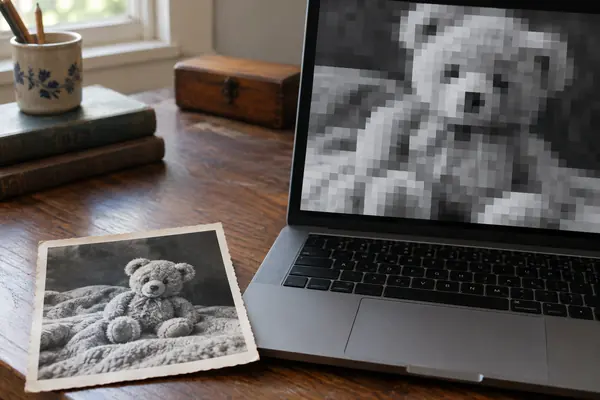
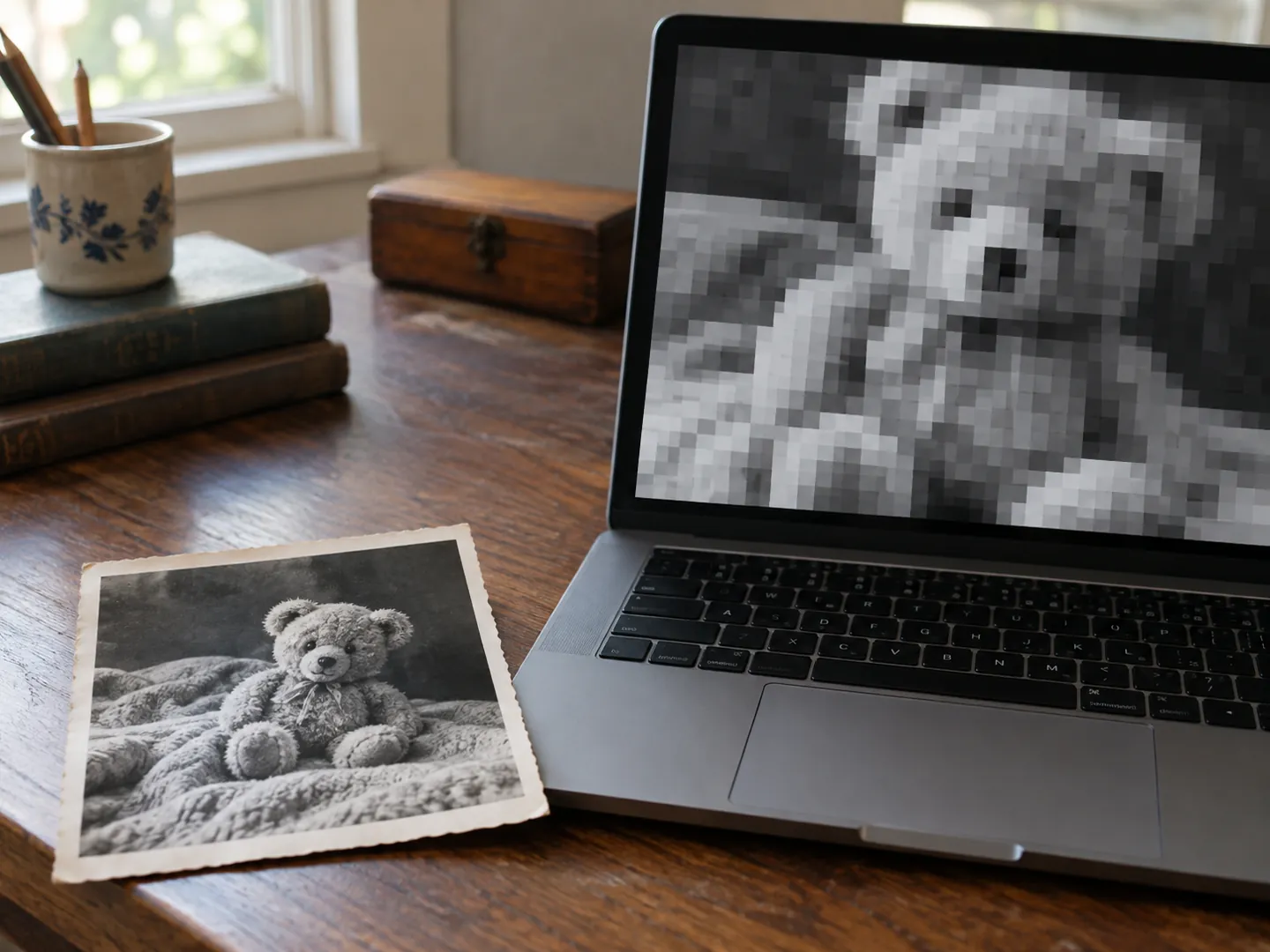
Every digital picture is a grid of tiny samples.
Each one is a pixel, short for picture element. The idea goes back to a 1957 scan of a baby's photograph, and it still explains how your screen, your camera and your colour codes work.
PICTURE element
Find the pixelTHE SHORT ANSWER
One word, three jobs:
a dot of light, a sensor cell and a number in a file.
HISTORY
In 1957 a team at the US National Bureau of Standards scanned a photo of a three-month-old baby into a computer. The image was 176 pixels on a side.
Where the word came fromSCREENS
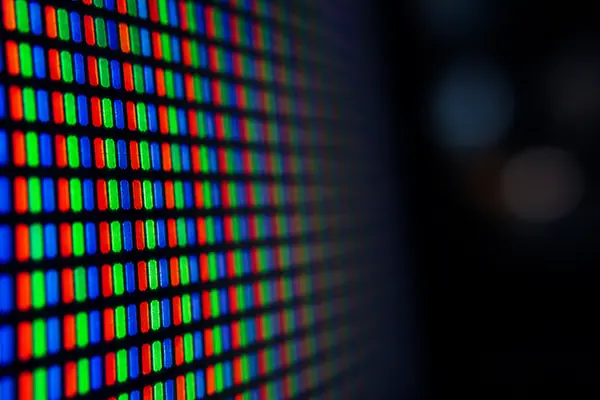
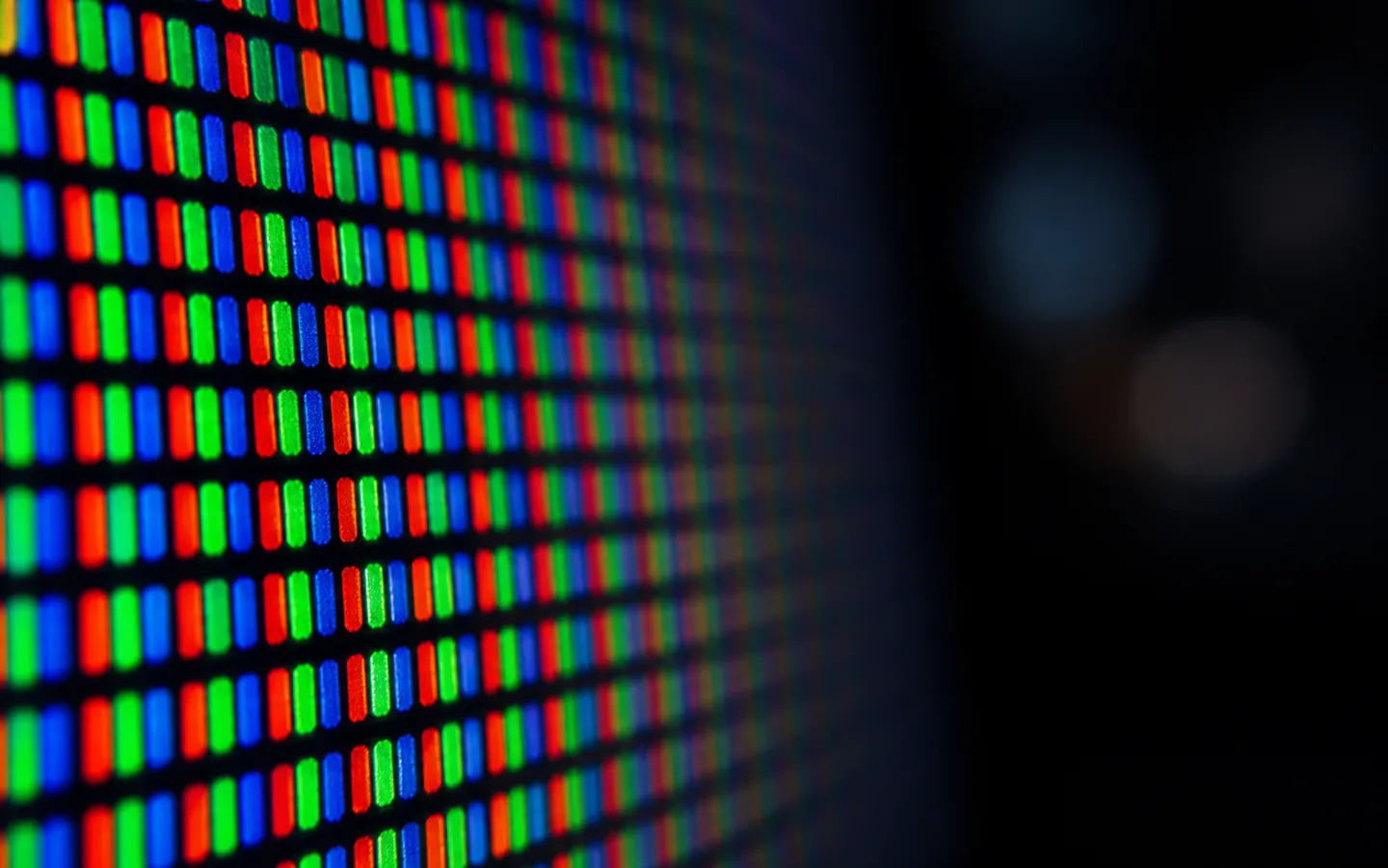
On a screen, each pixel contains three subpixels that give off red, green and blue light. Mixed together, they make every colour you see.
Find the pixelCAMERAS
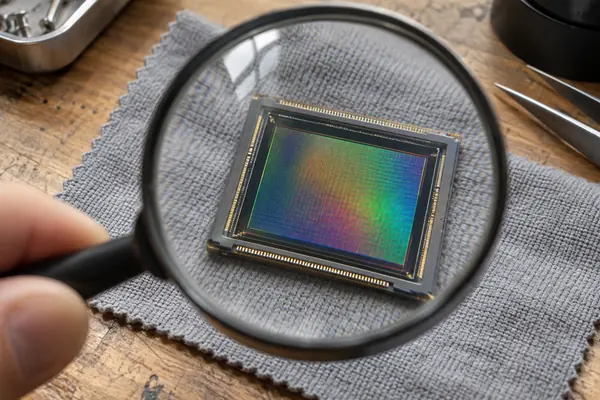
Most camera sensors put a colour filter over each sensor element. In the common Bayer pattern, 50% of filters are green and 25% each red and blue.
See the numbers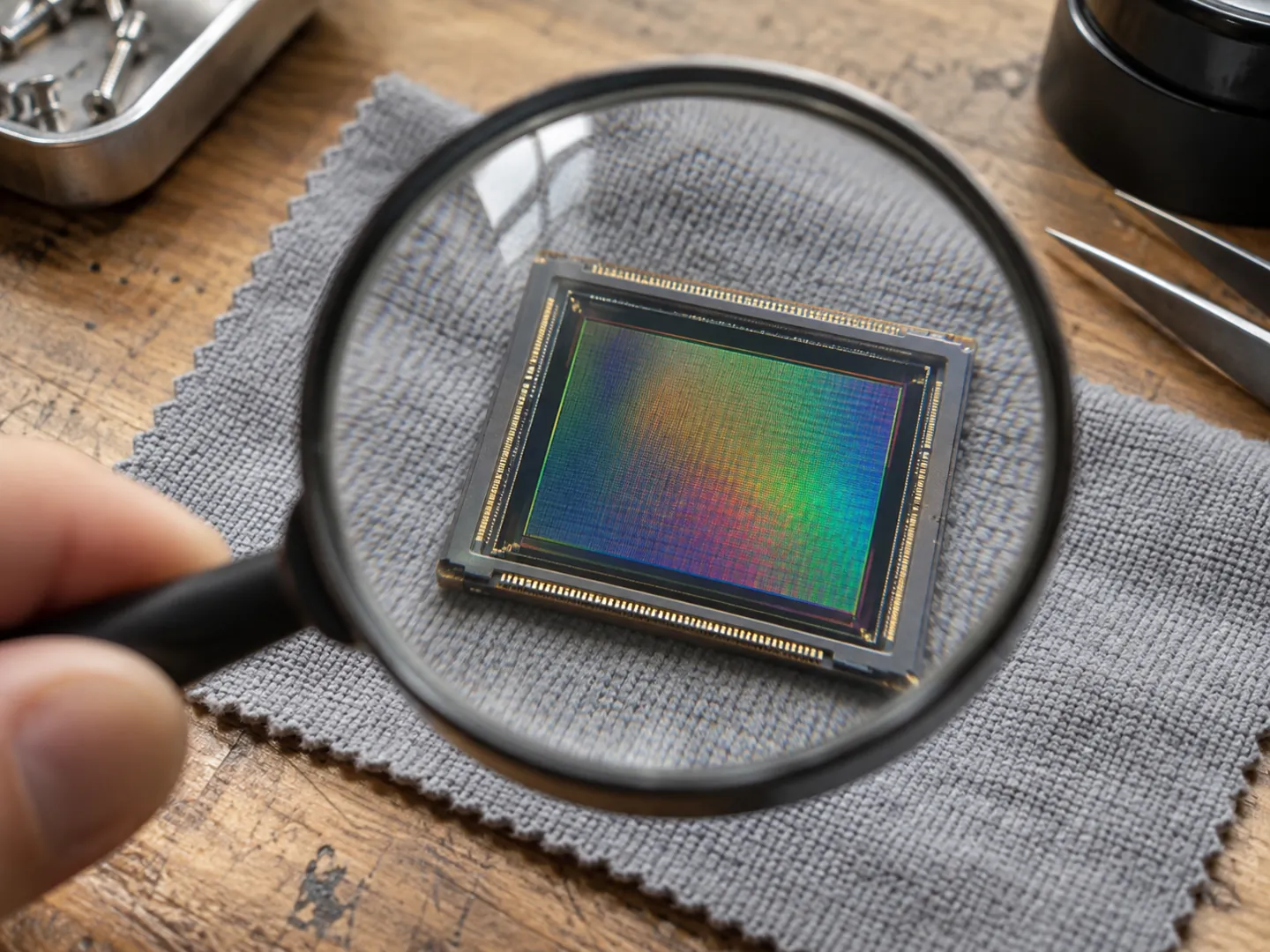
FOUR WAYS TO SEE PIXELS
None of these needs special kit. They turn the numbers on a box or in a menu into something you can picture.
The number of pixels in an image is the number of image samples: its width times its height. Megapixel ratings count them by the million.
Web pages use a reference pixel based on viewing distance: about 0.26 mm at 71 cm, but 1.3 mm when read from 3.5 m.
Hex colour codes are the red, green and blue numbers written in base 16. 000000 is black and FFFFFF is white.
On most sensors each element measures one colour, so the camera interpolates full-colour pixels from those samples, a process called demosaicking.
TWO NUMBERS WORTH KNOWING
One figure from the first digital image,
one from how colour is stored today.
176px
Pixels on each side, 1957
NIST says the first image scanned into a computer measured just 5 by 5 centimetres and 176 pixels on a side. Life magazine later listed it among 100 photographs that changed the world.
FIRST DIGITAL IMAGE · NIST
256³
Colours from red, green and blue
With each of red, green and blue stored as a number from 0 to 255, a pixel can show 256 × 256 × 256 = 16,777,216 different colours.
8-BIT COLOUR · EU GUIDE
The 1957 scan was made on SEAC, which the US National Bureau of Standards (now NIST) developed as the nation's first programmable computer, using a rotating drum scanner built by the same team.
A QUICK PIXEL FINDER
Pick a place a pixel lives to see what it actually holds. The bar shows how much colour information a single pixel carries on its own there.
Based on the EU data visualisation guide and a 2006 history of the pixel presented at the IS&T/SPIE Electronic Imaging symposium.
WHERE THE WORD CAME FROM
Researcher Richard Lyon traced the first published use of pixel, for picture element, to Fred C. Billingsley of the Jet Propulsion Laboratory, in two 1965 papers on processing Ranger and Mariner spacecraft photography.
The rival word pel came from William F. Schreiber of MIT, published in 1967. Much earlier, Arthur Korn's 1904 book on sending photographs by wire used the German Bildpunkt, picture point, and 1920s writers spoke of image elements and picture units.
Questions
Picture element. It is the smallest resolved unit of a digital image or display, with its own brightness and colour. The word was first published in 1965.
NIST says it was a 1957 scan of a photograph of Russell Kirsch's three-month-old son, made on the SEAC computer. It measured 5 by 5 centimetres and 176 pixels on a side.
Each pixel has three subpixels that give off red, green and blue light. Different strengths of the three mix to make other colours, which is called additive colour.
On the web, 1px is defined as 1/96 of an inch, based on a reference pixel seen at arm's length. On a higher-resolution device, such as a printer, the same 1px area can be covered by 16 dots.
Not always. Most sensors sit under a mosaic of colour filters, so each sensor element records one colour, and full-colour pixels are interpolated from those samples.
Updated
ABOUT THIS NAME
doodlepixel.com is part of the DoodleSale portfolio. Check the current listing and available purchase or lease options.